
Banks County Criminal History Checks
No single database holds every Banks County criminal record. Start with the kind of event you need. Filed felony cases route through the Superior Court clerk and the electronic provider listed by Georgia Courts. A new arrest may first appear in the county's Citizen Connect booking search. Incident narratives, detention files, and body-camera records stay with the sheriff or the agency that made the arrest. Georgia Felon Search covers a narrower statewide set of felony conviction data, while the Georgia Crime Information Center, or GCIC, maintains the central repository.
Gather the full legal name, date of birth, spelling variants, and an approximate event date. A case number is useful, but a warrant number may be the only identifier before prosecutors file a case. Follow this order:
- Check the official county booking interface for recent custody.
- Use Georgia Courts E-Access to identify the Banks Superior provider for filed cases.
- Ask the sheriff or originating police agency for the incident and arrest report.
- Compare the booking charge with the clerk's filed charge and disposition.
- Order a certified clerk copy or official GCIC check when formal proof is needed.
The Georgia court-record provider directory shows where Banks Superior records can be searched.
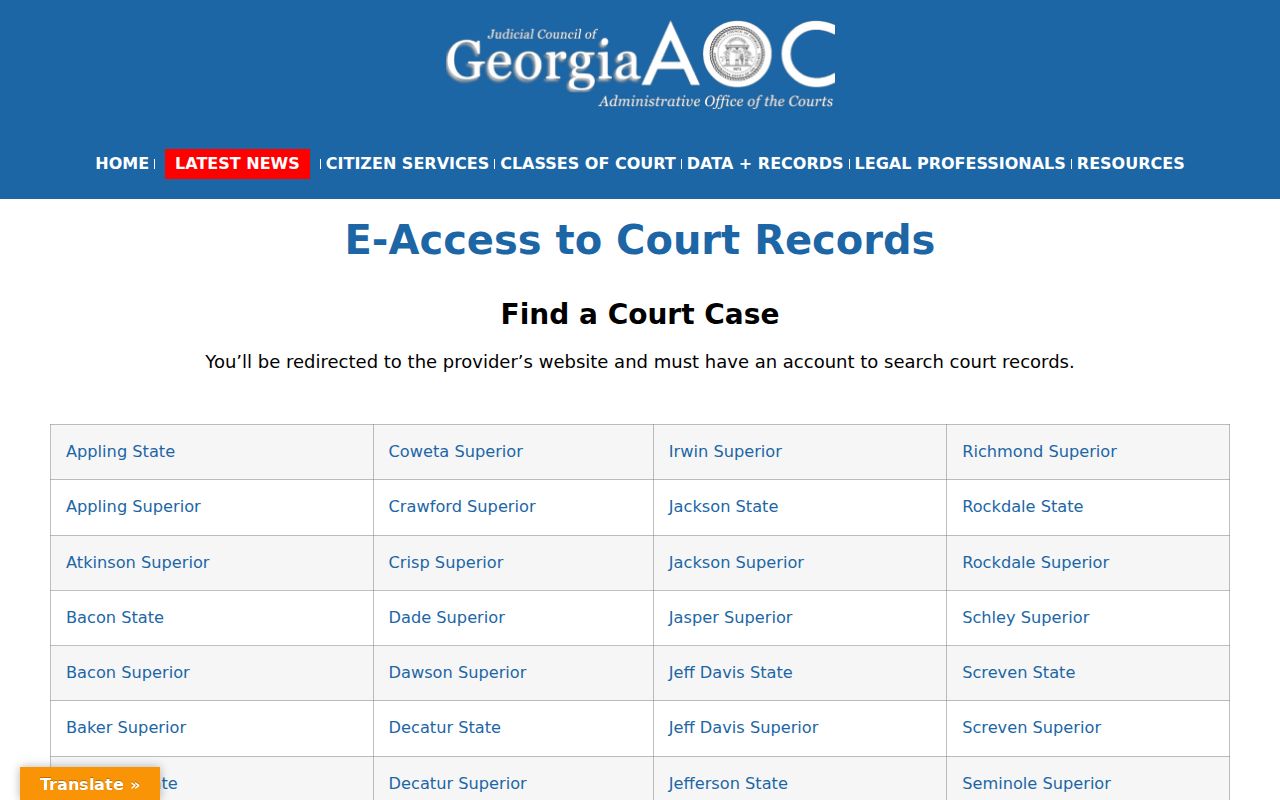
That directory is a route to the provider, not a guarantee that every new or older case is online.
Identity checks matter at every step. Match more than a name when the official result supplies a birth date, middle name, physical description, or agency identifier. Search spelling variants, but do not combine two partial profiles into one person. If the court provider has no result, ask the clerk whether the case is too new, too old, or indexed under a different party form. A certified court copy is the strongest source for the filed outcome.
Four Banks County Record Systems
A single arrest can create four records with different purposes. The arresting agency writes an incident or probable-cause narrative. Central Intake creates a booking and custody record. Magistrate Court creates warrant, first-appearance, and bond material. If the prosecutor files a charge, the Superior clerk opens a numbered case and records later orders. Fingerprints and the disposition can also flow to GCIC. A name search in one system therefore cannot stand in for the others.
| Source | Best for | Key limit |
|---|---|---|
| Arresting agency | Incident narrative and evidence references | Does not prove a filed charge |
| Banks Jail | Booking, bond, holds, and release | Booking charges may change |
| Courts | Warrants, filed charges, orders, and outcomes | A new matter may lack a case number |
| GCIC | Georgia repository history | Depends on identity and disposition reporting |
Read the sources as a chain: arrest → booking → charging decision → court disposition → repository update. Gaps often reflect timing or routing, not a final legal conclusion.
This division also explains why dates can differ. The arrest date, booking date, accusation or indictment date, plea date, sentencing date, and repository update date mark separate acts. Record each label with its source. A late GCIC update does not change when the court entered its order, and a jail release does not by itself close the criminal case.
Official Background Checks in Georgia
The Georgia Bureau of Investigation's GCIC is the state criminal-history repository. Public felony conviction information is available through Georgia Felon Search for a $15 transaction. It uses a full name, race, sex, and date of birth. The result is not a complete Banks County case file and does not substitute for clerk records, arrest reports, or a subject's fuller fingerprint-based history.
For a fingerprint-based process, Georgia uses GAPS capture through IdentoGO with the correct service code. People reviewing their own history may also follow the GCIC criminal-history FAQ. The FBI offers a separate subject-only Identity History Summary for federal records. Official channels differ because each answers a different question.
The official Georgia Felon Search entry illustrates the statewide conviction route.
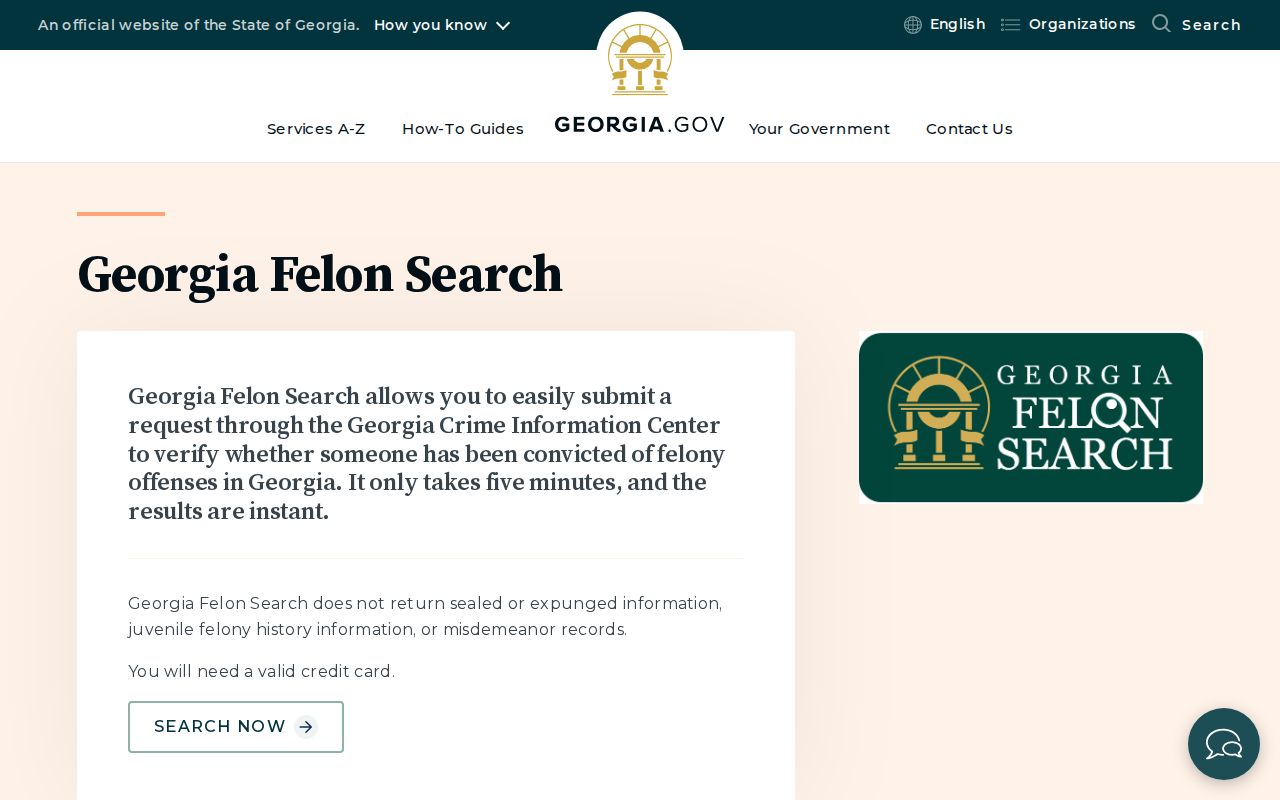
Use its match as a lead and verify the underlying Banks County disposition with the clerk.
Banks Cases After Circuit Change
Banks County moved from the Piedmont Judicial Circuit to the Mountain Judicial Circuit on July 1, 2024. That change matters in a record search. Historic orders and older pages may correctly retain Piedmont captions, while current calendars and offices use Mountain. Rejecting an older record only because its circuit name differs can hide a valid case.
The Banks Superior Court clerk remains the local keeper of filed records at 144 Yonah-Homer Road in Homer. The office is open weekdays from 8:00 a.m. to 5:00 p.m. and can be reached at 706-677-6240.
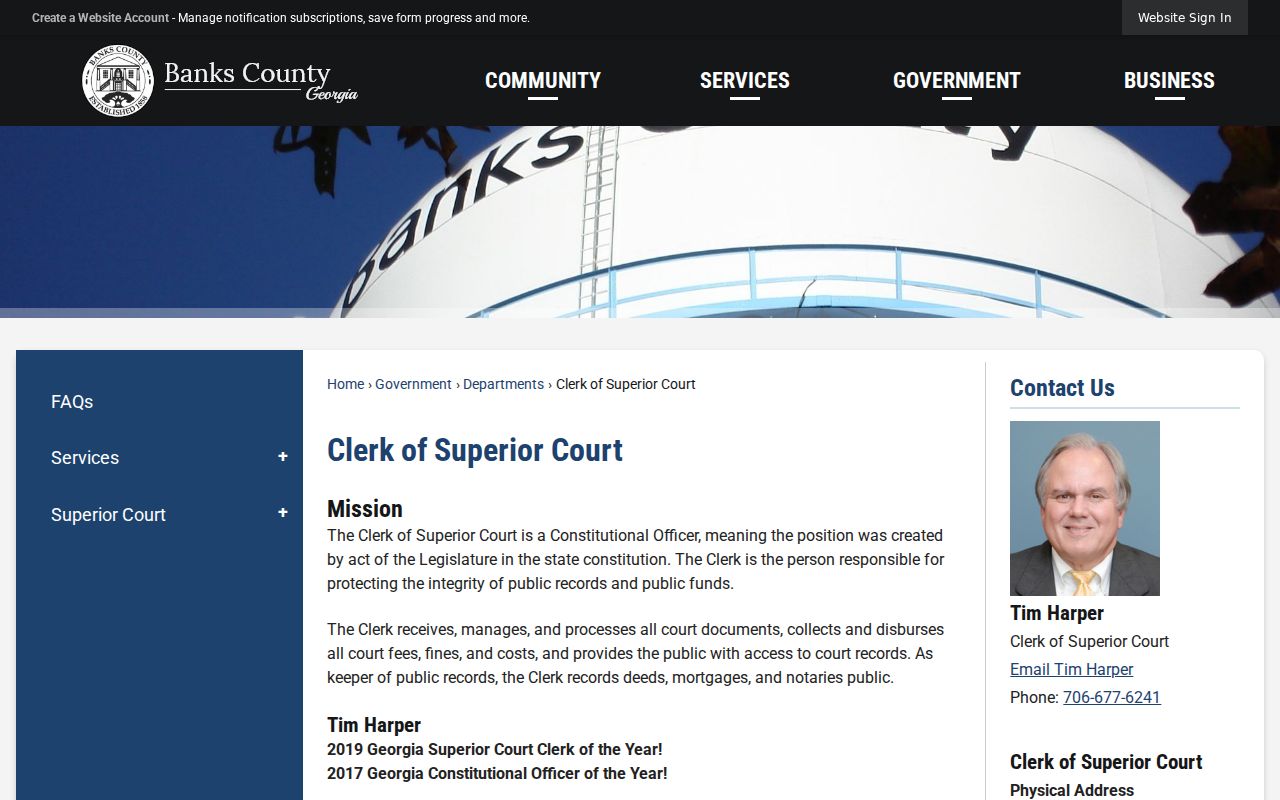
The clerk is the practical fallback for certified copies, older files, and cases that the provider does not expose.
Note: Search old Banks County records under the circuit shown on the filing, but use Mountain Circuit sources for current calendars.
Kinds of Criminal Records
Banks County record types describe different stages. An arrest record documents a seizure and alleged offense. A booking record adds intake, bond, holds, and release data. A court file shows what prosecutors actually filed and how a judge resolved it. A conviction entry reflects a qualifying final outcome sent to the repository. Warrant, probation, parole, corrections, and registry records each have their own custodian.
- Arrest and incident files: request them from the arresting agency.
- Booking and detention files: use the Banks County Sheriff and Jail.
- Criminal case files: use Magistrate, Probate, municipal, or Superior Court based on jurisdiction.
- State custody profiles: use Georgia Department of Corrections Offender Search.
- Registry records: use the Georgia Sex Offender Registry and confirm local details with the sheriff.
The Banks Magistrate Court page identifies the limited-jurisdiction court and its local contact.
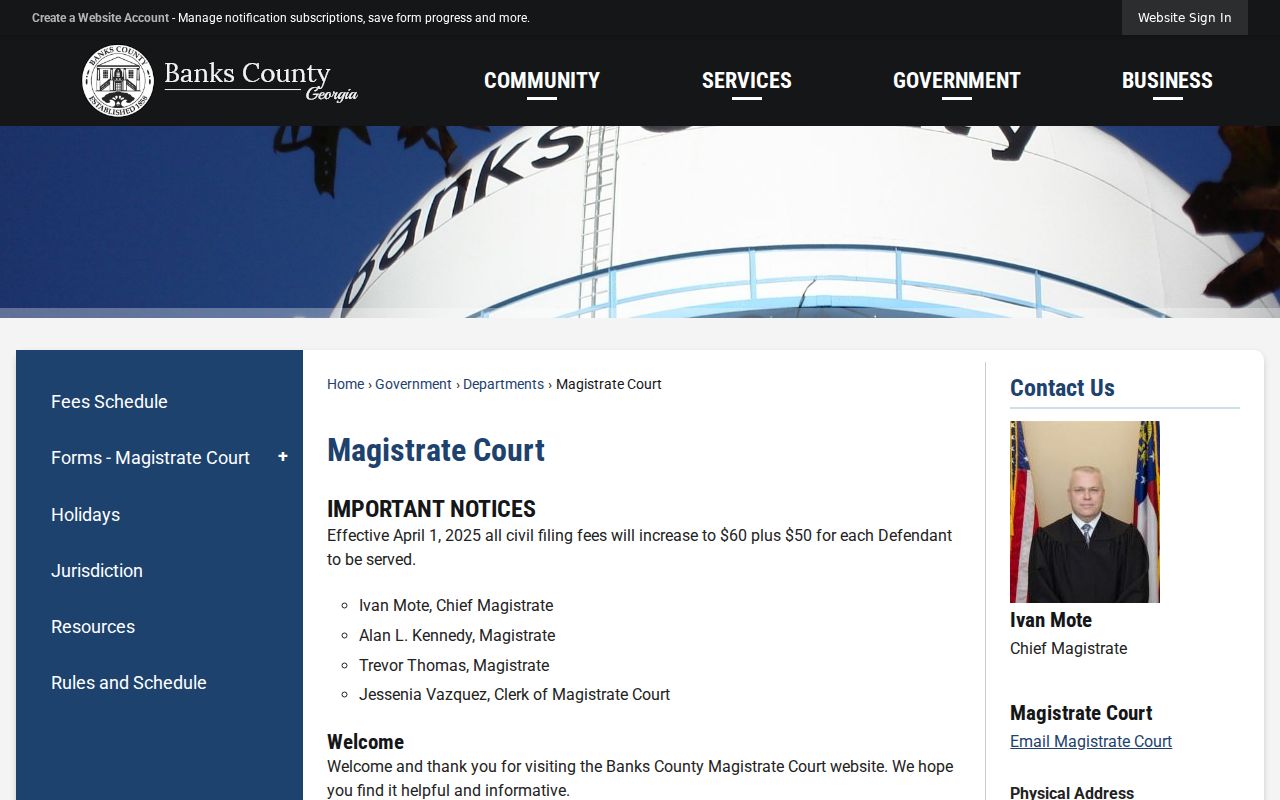
Magistrate records may be the best starting point when a warrant or first appearance predates a Superior case number.
Banks Sheriff Record Requests
The sheriff's open-records channel accepts requests for incident reports, accident reports, case files, and arrest or detention records. The records contact is Stephanie Rhodes. Submit the online Banks County open-records request, email openrecords@bankscountysoga.org, or call 706-677-2248 extension 4017. Include the event date, location, originating agency, report or booking number if known, and the exact material sought.
Georgia's Open Records Act generally requires a response within three business days. That is a response period, not a promise that a large file will be finished in three days. Ask for a cost estimate because search, retrieval, redaction, copies, and media can produce lawful charges. If a city officer made the arrest, request the narrative from that city even when Central Intake handled the booking.
The official Banks County Sheriff page provides the agency's identity and public contact.
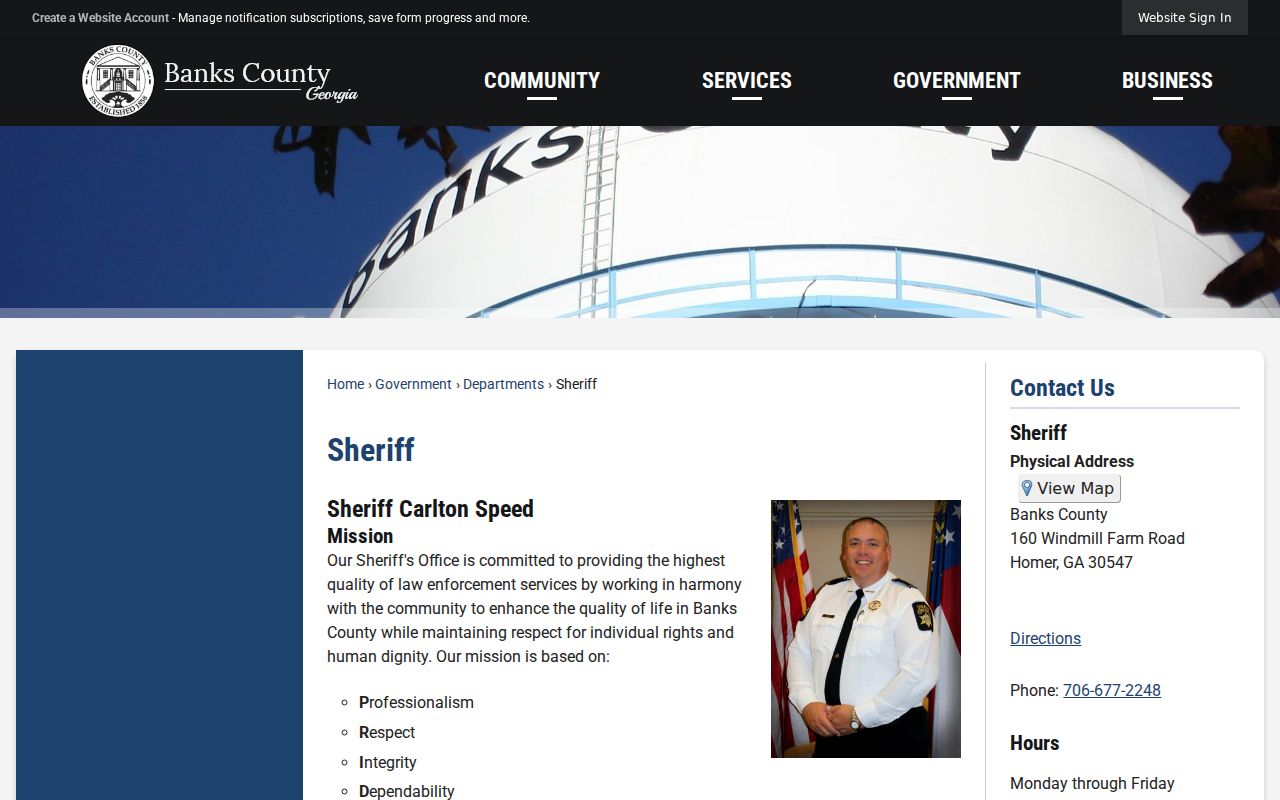
This channel reaches local source files that a statewide name search does not display.
Banks County Criminal Records: What They Contain
A criminal record should be read field by field. Identity details help distinguish people with similar names. Arrest and booking fields describe the initial event. Charges identify alleged statutes, while the disposition records what happened in court. A sentence may include confinement, probation, fines, or conditions. Custody and supervision fields can change after the case closes.
| Name & Identifiers | Legal name, aliases, date of birth, sex, race, OTN, SID, and agency numbers where public. |
|---|---|
| Arrest / Booking Data | Date, agency, alleged charge, booking number, bond, hold, and release. |
| Charges & Statutes | Filed count, offense text, code section, severity, and amendments. |
| Disposition | Conviction, acquittal, dismissal, nolle prosequi, no bill, or dead docket status. |
| Sentence | Custody, probation, fines, credit, and court-ordered terms. |
| Custody / Supervision | Institution, active status, release, parole, or probation information where public. |
“Nolle prosequi” means the prosecutor declined to continue a charge at that time. “No bill” means the grand jury did not indict. “Dead docket” pauses a case without a final trial outcome. None should be reported as a conviction.
Banks Jail Central Intake
The Banks County Jail is a 60-bed facility opened in 2004. Central Intake processes arrests from every Banks County law-enforcement agency, which makes the jail a central place for recent custody information even though incident reports remain with the originating agency. The facility also handles classification and can host bond hearings before a visiting judge or by video.
Use Banks County Citizen Connect for Current Confinements or Admits by Date Range. The recent-admits tool offers short preset ranges and a custom range capped at 31 days, plus filters for arresting agency or charge. CAPTCHA and date limits can block a search, so call 706-677-2248 when an expected result does not appear.
The county's Banks Jail overview explains the facility and Central Intake role.
Once a sentenced person transfers to state custody, switch to the Georgia Department of Corrections search.
Georgia Public Access Laws
Georgia law favors access to public agency records, but it also protects material such as juvenile files, sealed or restricted history, confidential victim data, medical information, and qualifying active-investigation details. An office should release segregable public portions after lawful redactions. Court access rules and GCIC dissemination rules can differ from the sheriff's open-records process.
Key authorities:
O.C.G.A. § 50-18-71 sets Georgia's inspection, response, and fee framework for public records.
O.C.G.A. § 35-3-35 governs access to and dissemination of criminal-history information.
O.C.G.A. § 35-3-37 provides Georgia's record-restriction and correction process.
O.C.G.A. § 42-1-12 establishes the state sex-offender registry.
State law provides the floor. The specific holder still decides which parts of a requested file can be released.
Write a narrow request. Name the office, event, date range, person or incident number, and desired format. A request for “all criminal records” can force a costly search across unrelated systems. The custodian may explain an exemption or a production timetable, but the requester can still seek the nonexempt parts. Certified court copies follow clerk procedures rather than the sheriff's report process.
From Warrant to Case Number
Banks County publishes a useful routing detail. Law enforcement processes a Magistrate-issued warrant, then the sheriff transmits it to the clerk for judge assignment. The clerk sends it to the prosecutor. The prosecutor may draw the case for grand-jury presentation or filing, and only then does the clerk assign a criminal case number. A record can therefore exist before a standard case-number search works.
The Banks County District Attorney page identifies the local prosecution office.
When a case seems too new, use the warrant number with Magistrate Court or the sheriff before returning to the Superior clerk.
Note: Banks Magistrate hears warrant applications on Tuesdays, while first appearances occur as needed at the courthouse or jail.
Restricted, Sealed & Expunged Records
Georgia generally calls its remedy “record restriction,” not expungement. Restriction limits public access to eligible GCIC history but does not erase every agency or court record. Arrests before July 1, 2013 usually require an application that starts with the arresting agency and prosecutor. Later eligible arrests often route through the prosecutor's electronic decision process. Eligibility turns on the outcome and statute, not merely the age of the case.
Use the Georgia record-restriction walkthrough and the GBI restriction instructions. A local agency may charge up to $50, and GCIC may impose its processing fee. Georgia provides a 30-day appeal period for a denial. Correct missing or wrong disposition data at the source agency or clerk before assuming a restriction request will cure it.
A dismissed arrest can remain visible until the disposition is properly reported and any eligible restriction is processed. Juvenile and sealed files follow separate confidentiality rules.
Banks Records After State Transfer
County custody and state custody are separate. The Banks Jail search covers people booked locally. The Georgia Department of Corrections Offender Search covers sentenced state offenders and can be searched by name, physical filters, institution, status, GDC ID, or case number. Profiles may show a photo, convictions, institution, custody status, and release or parole details. First Offender completions are not published.
The official GDC locator interface is the correct next stop after a transfer.
Cookies must be enabled, and trying the first four letters of a last name can help when spelling is uncertain.
Banks County Record Counters
The county's justice offices sit close together in Homer, yet the address still determines which records are available. Court files belong at Yonah-Homer Road. Sheriff and detention material belongs at Windmill Farm Road. The Hudson Ridge annex can route general county questions but is not the criminal clerk.
Superior Court Clerk
144 Yonah-Homer Road
Homer, GA 30547
706-677-6240
Weekdays, 8:00 a.m.-5:00 p.m.
Magistrate Court
144 Yonah-Homer Road, Suite 10
Homer, GA 30547
706-677-6270
Sheriff and Jail
160 Windmill Farm Road
Homer, GA 30547
706-677-2248
The Banks County government homepage gives the broader county context for these offices.
Call the exact office before travel if you need certified copies, recording access, or an accommodation.
City-by-City Criminal Records in Banks County
Homer, Maysville, and Baldwin are the three largest municipalities by Banks-resident population in the county's 2024 comprehensive plan. Maysville and Baldwin cross county lines, so the arrest location, booking jail, and issuing court matter more than the city name alone. City reports and municipal dockets remain with the municipality, while Banks-side jail and felony records route through county offices.
Homer Record Check
1,526 Banks residents · County-seat records split among court, sheriff, jail, and town sources.
Maysville Record Check
1,159 Banks-side residents · Confirm whether the event belongs in Banks or Jackson County.
Baldwin Record Check
700 Banks-side residents · City police and municipal files may pair with either county system.
Use the municipal source for a city report or ordinance case, then follow a Banks-side booking to Central Intake and a felony filing to Mountain Circuit Superior Court.