
Banks Charges Reach the Court
A warrant and a numbered prosecution are not the same record. After law enforcement processes a Magistrate warrant, Banks County’s published route sends it through the sheriff and clerk for judge assignment. The clerk then passes the matter to the District Attorney or other proper prosecutor. The prosecutor may prepare it for grand jury review or use another lawful filing route. Only after filing does the clerk assign the criminal case number that a standard docket search expects.
This gap can explain an empty provider search soon after an arrest. Ask Magistrate Court about the warrant and early hearings. Ask the sheriff about service and custody. Ask the prosecutor or Superior Clerk whether charges have reached the filing stage. Keep the warrant number, arrest date, and exact name ready. Once the clerk assigns a case number, use that identifier for later docket checks because it follows the court prosecution rather than the single booking.
The District Attorney’s Banks County listing is at 144 Yonah-Homer Road, Suite 7, with telephone 706-677-6205 and weekday hours of 8:00 a.m. to 5:00 p.m. That office prosecutes cases; it is not a substitute for the clerk’s public case-file counter. The distinction keeps a status inquiry from becoming a misdirected records request.
Criminal Court Cases in Banks County
Banks Superior Court hears felonies and other general-jurisdiction criminal matters. Magistrate Court issues arrest and search warrants, holds first appearances, considers bond, extradition, and committal matters, and handles several limited misdemeanor or ordinance matters. Banks County does not list a separate State Court. Probate Court may hear certain traffic, game and fish, and misdemeanor cases when no State Court exists, unless a jury trial is requested. City municipal courts keep their own ordinance and qualifying traffic files.
The custodian depends on the stage. Superior Court Clerk Tim Harper keeps filed Superior Court documents at 144 Yonah-Homer Road in Homer. Magistrate records remain with Magistrate Court in Suite 10. A municipal citation does not become a Superior felony file merely because both concern criminal law. Identify the issuing court on the citation, warrant, or notice before asking for a record.
Banks County Court Circuit Change
Banks County moved from the Piedmont Judicial Circuit to the Mountain Judicial Circuit on July 1, 2024. Current Banks Superior Court calendars use Mountain Circuit branding and list the judges assigned to that circuit. Older orders, saved links, and cached pages may still say Piedmont. That older label can be historically correct without describing the current court structure.
Use the Mountain Judicial Circuit calendars for current settings. A calendar helps confirm when a Banks County criminal case is scheduled, but it is not the full docket. The clerk remains the source for the official filed record and certified copies.
The county court schedule source shows how local hearings are organized.
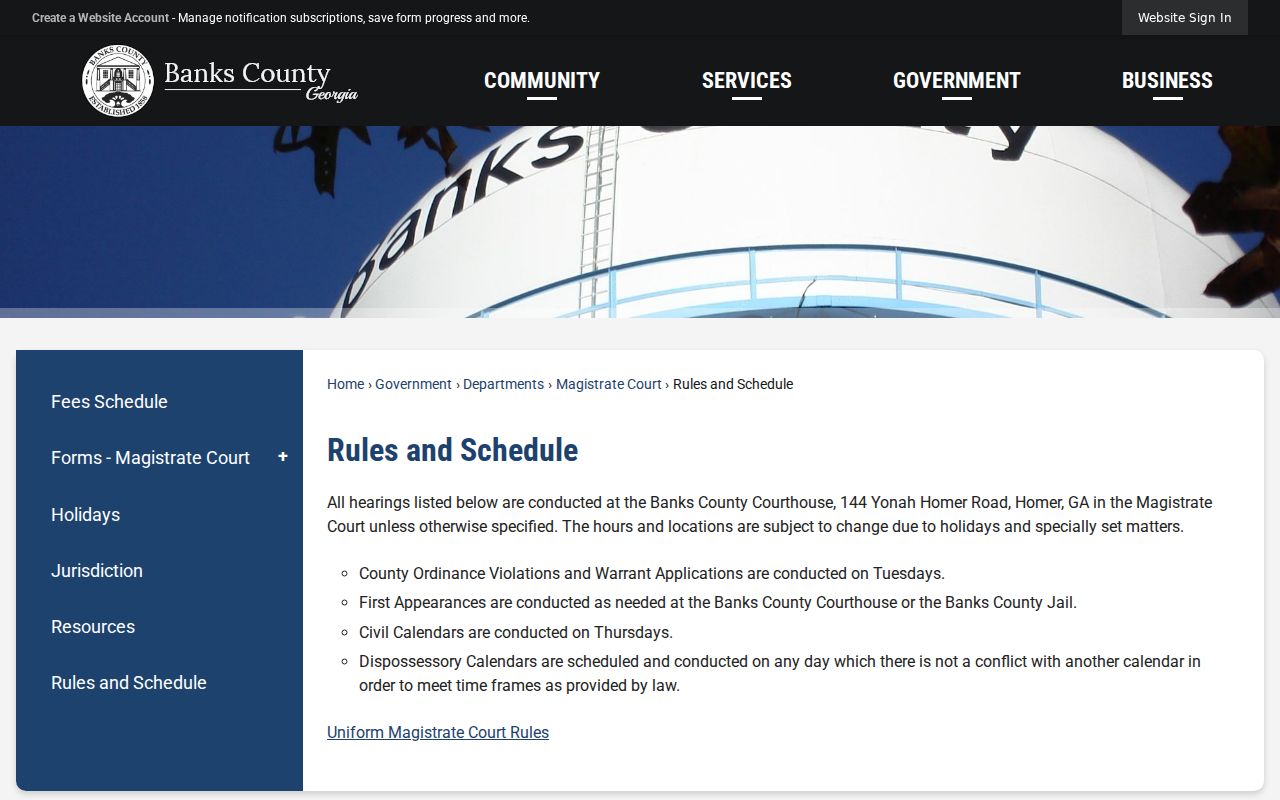
The schedule helps a reader separate a hearing date from the documents and outcome stored in the case file.
Banks County Case Record Searches
Georgia Courts E-Access is a provider directory rather than one statewide case database. It lists Banks Superior Court, but the linked provider requires an account. Search results and document access can differ by provider permissions. The clerk supplies missing, older, or certified material.
- Open Georgia Courts E-Access and choose Banks Superior Court.
- Create or use the provider account, then select the criminal case search.
- Search by party name or case number and confirm the court and filing year.
- Read each charge and its disposition instead of relying on the overall status alone.
- Ask the Superior Clerk for unavailable images, older files, or a certified copy.
| Search field | Use | Search tip |
|---|---|---|
| Party name | Find a named defendant | Try careful spelling variants |
| Case number | Open a known file | Include the full court format |
| Filing year | Narrow common names | Match the likely prosecution year |
| Case type | Limit the docket group | Select criminal when offered |
| Status | Separate open and disposed | Still inspect charge-level results |
Banks Warrant Number Comes First
A fresh arrest may not produce a searchable Superior case number at once. Banks County publishes a clear handoff: law enforcement processes a Magistrate-issued warrant, the sheriff sends it to the Superior or State Court clerk for judge assignment, the clerk routes it to the prosecutor, and the prosecutor draws the case for grand jury presentation or filing. The clerk assigns the criminal case number only after that step.
The county’s judge-assignment workflow illustrates that local sequence.
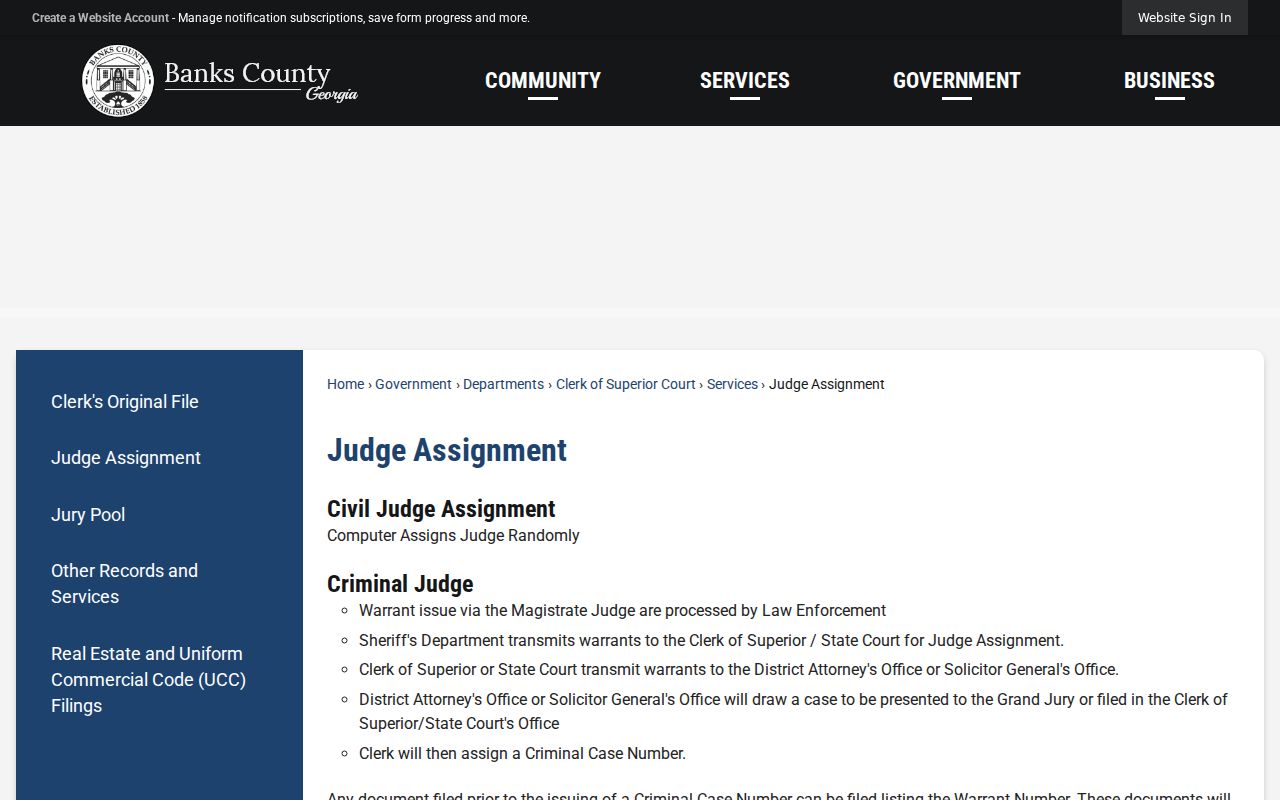
A person searching too soon should keep the warrant number and call Magistrate Court rather than conclude no record exists.
What a Criminal Case File Contains
A Banks County court file is organized by prosecution, not by jail admission. It can show how the initial allegation changed after prosecutor review and how each charge ended. Public copies omit or redact protected personal data, victim details, minor information, and sealed material.
| Case number and court | Identifies the tribunal, file, and filing sequence. |
|---|---|
| Charging document | Shows an accusation or indictment and the formal charges. |
| Docket entries | Lists filings, orders, motions, and procedural events. |
| Hearing dates | Shows settings and calendar activity, subject to change. |
| Disposition and judgment | Records dismissal, plea, verdict, or other outcome by charge. |
| Sentence and conditions | States custody, probation, fines, restitution, or other terms. |
Provider access may also show the assigned judge, attorneys, bond references, financial entries, and document links. A clerk-certified disposition is the stronger source when a repository history lacks the outcome.
Which Banks Court Has Records
For a warrant, first appearance, bond, or committal hearing, start with Banks Magistrate Court at 706-677-6270. For a filed felony accusation, indictment, docket, disposition, or sentence, call the Superior Clerk at 706-677-6240. Both are at 144 Yonah-Homer Road, yet they hold distinct files. The shared address does not merge the records.
The Magistrate Court jurisdiction page explains the lower court’s criminal role.
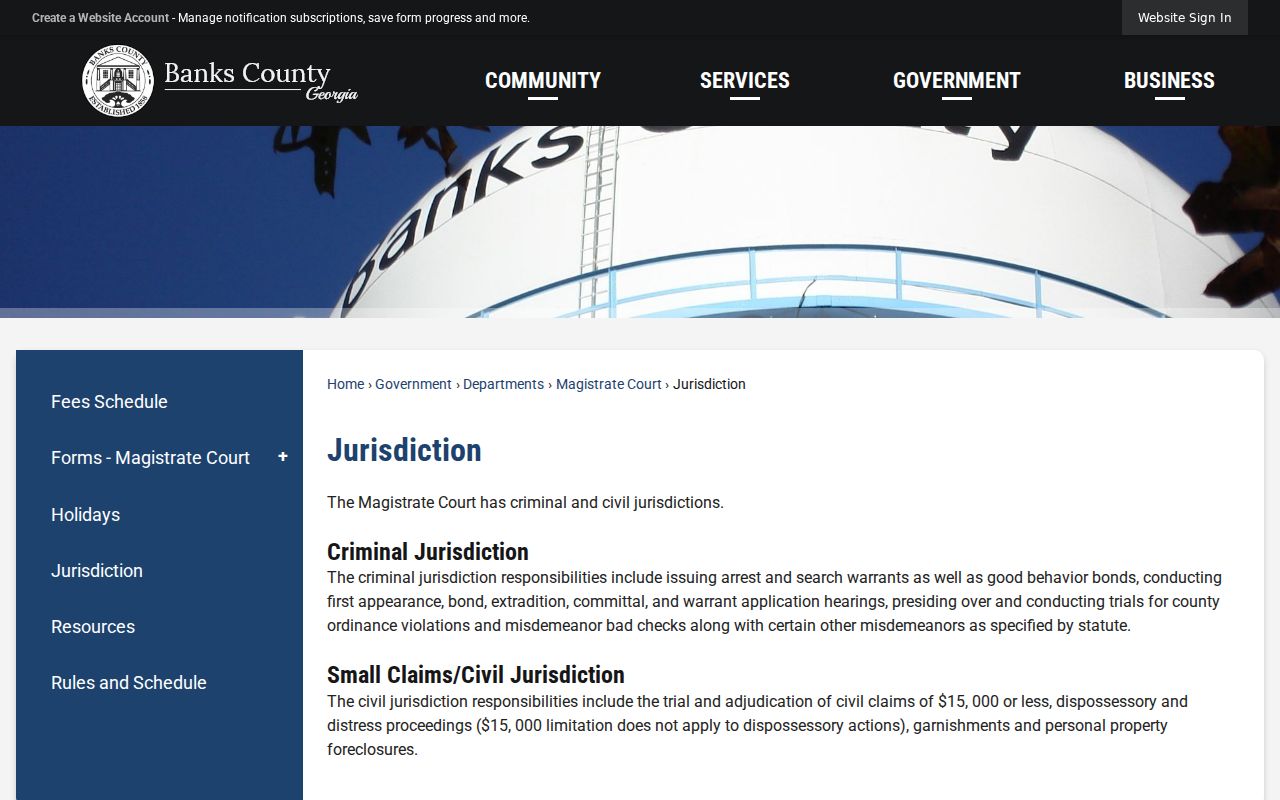
The published jurisdiction is useful when a warrant event appears but no Superior docket is yet available.
Criminal Case Stages in Banks County
The case starts with allegations, but the filed charge can differ from the booking label. Magistrate Court handles the early warrant, first-appearance, probable-cause, and bond work. A prosecutor then decides how to file or present qualifying charges. The Superior docket records arraignment, motions, plea or trial, and the final disposition.
Case flow: Charges Filed › Arraignment › Pretrial › Plea or Trial › Disposition › Sentencing
A no bill means the grand jury declined to indict. Nolle prosequi means the prosecutor formally stopped a charge. Dead docket means prosecution is suspended rather than tried or finally dismissed. These terms are not interchangeable, so read the entry tied to each count.
Banks County Certified Court Copies
Online views are useful for finding a file, but many official tasks call for the clerk’s copy. Banks Magistrate publishes a charge of ten cents for a plain copy and $1.50 for a certified copy. The Superior Court landing page does not publish a criminal copy or search fee. Ask for a quote and state whether certification is required.
The official Magistrate fee schedule is the source for those local amounts.
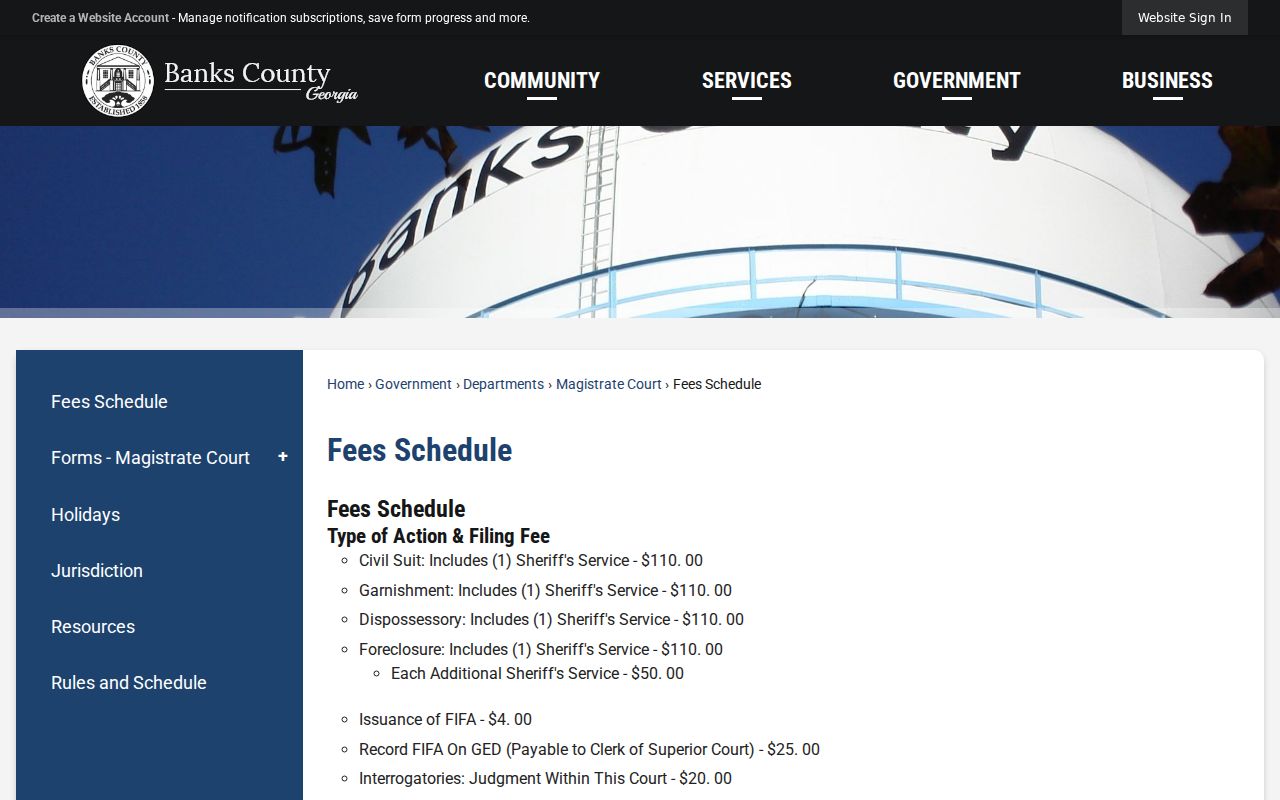
The distinction matters because a screen print may not carry the clerk’s seal or certification.
Banks Superior Court E-Filing Route
Banks Superior Court uses PeachCourt for e-filing. Filing and public case viewing are related but different functions, and an e-file provider account does not guarantee access to every image. Restricted, sealed, and protected data remain outside ordinary public access.
The Georgia e-filing provider chart confirms the provider used for Banks Superior Court.
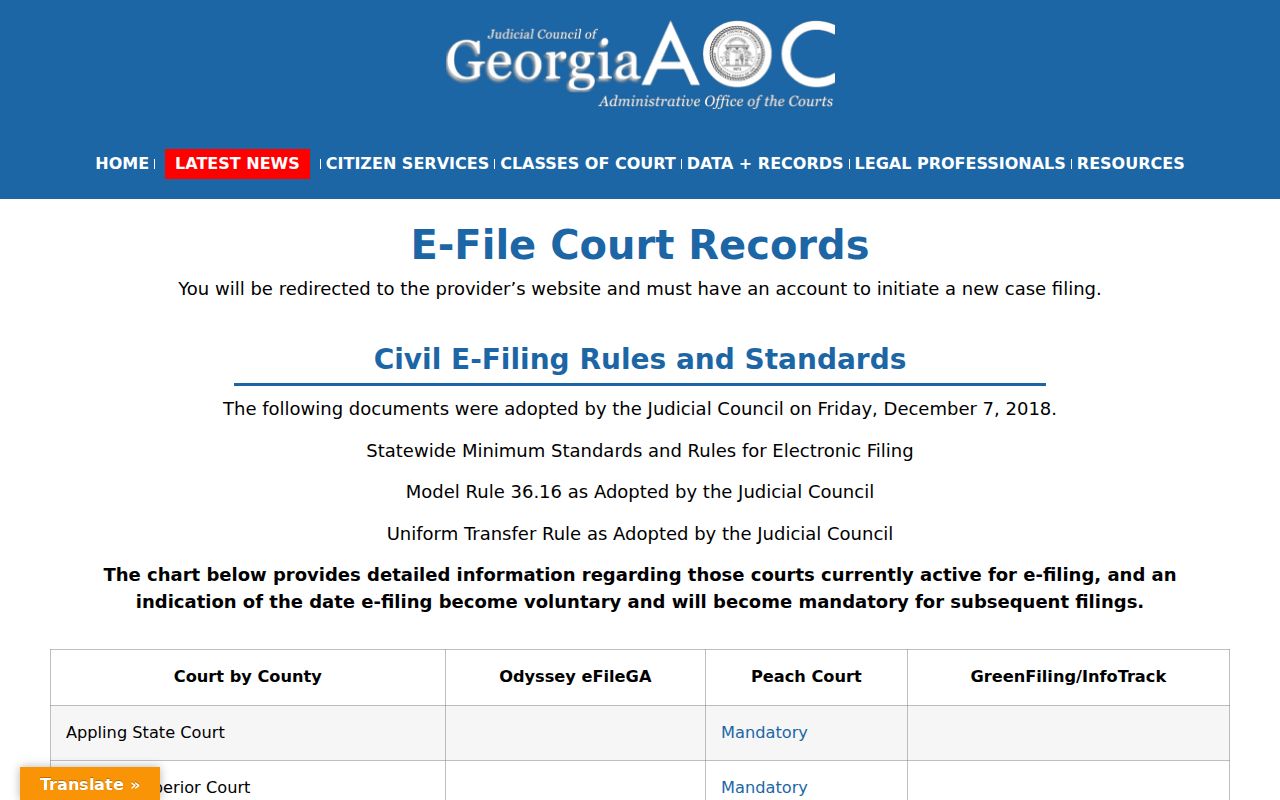
Use that chart to reach the correct filing system, then use the clerk when the public view lacks a needed Banks County court document.
Access Rules for Case Records
Georgia court records are broadly accessible, but access has limits. Sealing orders, juvenile confidentiality, protected victim and minor identifiers, Social Security numbers, and other exempt details can block or narrow disclosure. Ask for the segregable public portion when part of a document is protected.
The Georgia Open Records Act generally calls for a response within three business days, but that is not always the completion date for a large request. Judicial records also operate under court rules and sealing orders. If a GCIC history misses a Banks County disposition, obtain a certified outcome from the clerk and send it through the responsible reporting agency’s correction process.
Record restriction at GCIC does not erase each local court document. Georgia treats restriction as a limit on ordinary public access, not destruction of the record. A separate sealing step may apply to eligible court material. When a search still shows a case that should be restricted or sealed, compare the clerk docket with the prosecutor’s decision and the GCIC notice. The office that submitted an incorrect event must support the correction. A requester’s statement alone cannot change an official disposition.